
The healthcare sector has always valued knowledge, but the way professionals acquire it is rapidly changing. Traditional education builds a broad academic base through structured degrees and theoretical learning. Specialized training focuses on delivering highly targeted skills that are directly linked to specific job roles and industry needs.
The difference between traditional education and specialised training is quite apparent when looking at their purpose and mode of execution. Traditional education often prioritises comprehensive subject coverage over an extended period, while specialised training concentrates on practical, role-oriented skills in a shorter time frame. This means learners can enter the workforce faster, adapt quickly to industry demands, and progress into focused career paths.
Healthcare employers are increasingly seeking candidates who can demonstrate applied expertise rather than only academic achievement. This is why the discussion around traditional education vs specialised training has become more relevant than ever.
Shift from Traditional Courses to Specialized Training
Healthcare systems now need professionals who can step into operational roles quickly. This has accelerated the shift from traditional courses to specialized training in allied health fields.
Why the Change is Happening
Institutions and employers want candidates who require minimal on-the-job training. Students want a faster return on their education investment and practical skills they can use immediately. This creates a clear tension between long degree tracks and shorter, job-driven programs.
Speed, Cost, and Return on Investment
Specialized programs typically cost less than long degree courses and finish sooner. This allows students to start earning faster and repay training costs sooner. Employers get role-specific talent without long internal training cycles. That is a strong practical argument for this shift.
Where Learners are Choosing to Start
Many entrants now ask whether they should pursue traditional education or specialised training. The answer depends on long-term goals. Those aiming for clinical leadership or research may prefer extended degrees. Those who need to begin working in clinical roles quickly are choosing specialized pathways.
Advantages of Specialized Training
Specialized training offers clear advantages for individuals and for health services that must fill urgent skill gaps.
Individual Benefits
- Faster employment: New graduates can often begin work within months. This reduces the gap between training and income.
- Practical competence: Courses focus on hands-on skills that are directly used in clinical settings, such as venepuncture, ECG interpretation, or ventilator operation. These are taught and practised until students can perform them reliably.
- Stackable credentials: Learners can add short modules over time to expand their scope. This supports career mobility without repeating full degree programs. With a few years of hands-on experience, these credentials can provide professionals with quicker access to leadership or supervisory roles, overseeing clinical teams or managing department operations.
Industry Benefits
- Reduced onboarding time: Employers spend less time training new hires in basic procedures and protocols.
- Targeted capacity building: Facilities can fill specific shortages, for example, in imaging, dialysis, or trauma support.
- Adaptability to new technology: Short courses update faster to include new devices and workflows, keeping teams current.
Challenges and Considerations
Before moving from traditional education to specialised training, allied healthcare professionals and institutions must navigate a few practical and strategic hurdles. These are not barriers meant to stop progress but checkpoints to ensure the shift is both effective and sustainable.
Adapting to Rapid Curriculum Changes
Specialised training evolves faster than conventional academic programs. Medical technologies, treatment protocols, and emergency response standards can change within months. Educators and trainees must be prepared for regular curriculum updates, often requiring additional certification or refresher modules to maintain relevance.
Balancing Practical Skills with Foundational Knowledge
While specialised courses excel at hands-on skills, some professionals may find gaps in theoretical understanding if not supplemented properly. For example, a paramedic may master advanced airway management through training but still need foundational anatomy knowledge to adapt in unexpected scenarios.
Addressing Cost and Accessibility
Specialised programs can be more expensive per module compared to a standard degree. For smaller towns or rural healthcare setups, availability may be limited. This makes digital learning platforms and blended models essential to ensure equal access.
Industry Recognition and Career Progression
Some healthcare employers still prioritise traditional degrees for promotions or leadership roles. To counter this, specialised training providers must work closely with accreditation bodies and industry leaders to secure formal recognition of certifications.
How Allied Health Education is Embracing the Shift
The move from traditional education to specialised training is no longer an abstract discussion in the allied health sector; it is an active transformation backed by concrete strategies. Institutions, training bodies, and healthcare organisations are rethinking how knowledge is delivered and how quickly it can be applied in real-world scenarios.
Integrating Competency-Based Learning
Instead of time-bound semesters, many allied health programs are now structured around demonstrable competencies. A respiratory therapist, for example, might complete a module only when they can successfully manage a simulated critical care scenario. This ensures that graduates are immediately job-ready rather than simply degree-qualified.
Leveraging Digital and Simulation Technologies
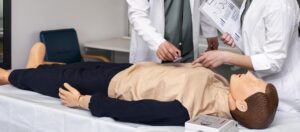
From high-fidelity mannequins for emergency drills to virtual reality modules that replicate surgical environments, technology has become the backbone of this shift. It allows learners to experience complex cases without patient risk, and to revisit scenarios until mastery is achieved.
Strengthening Industry Partnerships
Allied health institutions are building stronger links with hospitals, ambulance services, and diagnostic centres to design training that mirrors day-to-day clinical demands. This alignment reduces the common gap between what is taught in classrooms and what is needed in the field.
Pathways for Professional Growth
The shift is not only for entry-level professionals. Mid-career practitioners now have access to micro-credentialing programs and postgraduate certificates that deepen their expertise without taking them away from work for years. One such program is Acad Pro . For allied healthcare professionals who want to transition into a teaching profession and train skilled allied healthcare professionals, sign up today.
Types of Specialized Training in Allied Health
- Emergency Medical Response Training: This training prepares professionals to assess critical conditions rapidly, initiate life-saving interventions, and manage patients in high-pressure environments. It incorporates advanced simulation exercises, trauma care protocols, and decision-making frameworks for time-sensitive scenarios.
- Diagnostic Imaging Certification: Specialists in this field undergo intensive instruction on operating and calibrating imaging technologies such as MRI, CT, and ultrasound. Training includes image optimisation techniques, radiation safety compliance, and collaborative interpretation processes with medical teams.
- Laboratory Technology Programs: These programs focus on clinical laboratory operations, including specimen collection, diagnostic testing, and result verification. Trainees are instructed in quality control measures, biosafety protocols, and the use of analytical equipment with high precision.
- Rehabilitation Therapy Training: This discipline involves structured learning in musculoskeletal assessment, therapeutic exercise planning, and functional recovery techniques. The training equips practitioners to design progressive rehabilitation programs and monitor patient adaptation over time.
- Pre-Hospital Care Programs: Designed for paramedics and first responders, these programs address rapid patient assessment, emergency stabilisation, and transport coordination. Instruction also covers integration with hospital emergency systems for seamless care transitions.
- Healthcare Administration and Coordination Courses: Administrative training focuses on healthcare service delivery optimisation, regulatory compliance, and data management. Professionals are trained to streamline operations, enhance patient record accuracy, and coordinate interdisciplinary care teams effectively.
Why the Shift Matters for the Allied Health Care Industry
The shift towards specialised training is more than a curriculum change. It is a safeguard for the future of patient care and the stability of the Allied Health workforce. Across hospitals, rehabilitation centres, emergency response units, and home care services, the challenges facing healthcare professionals are evolving at a pace that cannot be addressed with general training alone. This movement towards role-specific learning has become a strategic necessity for the entire industry.
Adapting to Changing Patient Realities
Patient needs today are not only greater in number but also more complex. An ageing population means more cases involving multiple chronic conditions such as diabetes, respiratory illness, and cardiovascular disease. Each condition demands unique diagnostic approaches, equipment handling skills, and treatment protocols. Specialised training equips professionals to address these multi-layered cases without delays or errors, which can be the difference between stabilising a patient and losing critical time.
Keeping Pace with Technology
Modern healthcare tools such as portable cardiac monitors, AI-based imaging systems, and point-of-care testing devices have transformed how services are delivered. These are not tools that can be mastered through general theory alone. Specialised training ensures that the moment new equipment is introduced, professionals are already proficient in its operation, safety procedures, and troubleshooting. This reduces the costly downtime that often occurs when teams are unprepared for technological upgrades.
Meeting Higher Regulatory Standards
Accreditation boards and government bodies are increasingly tying licensing and service approvals to measurable skill competency. This is called a competency-based framework, where success is not about years of experience but about demonstrable ability to handle specific tasks to a set standard. Specialised training builds these competencies from the ground up, ensuring both compliance and credibility.
Building a Reliable Workforce
The Allied Health sector is under strain from global talent shortages and high turnover rates. When professionals feel confident in their skills and supported in their career development, they are more likely to remain in their roles. Specialised training acts as both a performance enhancer and a retention strategy, creating a workforce that can meet the demands of today while preparing for the challenges of tomorrow.
Programs such as the PG Certificate in Management – Pre-Hospital Care help healthcare professionals gain both hands-on skills and leadership training. This prepares them to handle urgent situations confidently and lead teams in emergency care settings.
RedVersity Solutions in Specialized Training for Allied Healthcare
Academic Excellence with Industry Alignment
- Partnerships with nationally and internationally recognised universities
- Curriculum designed around current healthcare challenges
- Exposure to emerging medical technologies and tools
- Integration of research-based learning into every course
Practical Skill Development
- State-of-the-art labs and simulation centres
- Real-case scenario training for emergency and routine care
- Guided mentorship from experienced healthcare professionals
100% Job Placement Guarantee
- Dedicated placement support team
- Network of leading hospitals, clinics, and healthcare organisations
- Career-matching to align skills with the right opportunities
Specialised Programs for Career Growth
Our Postgraduate Certificate in Prehospital Care Management (PGCM–PRHC) prepares professionals for leadership in emergency healthcare. It provides a comprehensive understanding of prehospital care systems and pathways to senior roles in healthcare services.
Global Recognition and Career Mobility
- Qualifications accepted by global healthcare employers
- Opportunities for international placements and collaborations
For allied healthcare professionals seeking to deepen the specialised nuances of their skillsets, Emerge Pro offers targeted training designed to elevate expertise and career growth. Sign up today to advance your professional journey with focused, industry-relevant skills.
FAQs
Contact Us
For detailed information on our allied healthcare programs or to discuss your educational goals, please reach out to our admissions team. We are ready to assist you with inquiries, guidance, and enrollment support through the following channels:
- Campus Address: 6B iLabs, Madhapur, Hyderabad, 500081
- Telephone: +91 90800 96302
- Email: admissions@redversity.com
We welcome the opportunity to support your journey toward specialized healthcare education and career advancement. Contact us today to take the first step.