Why Choose RedVersity? (USPs)

HSSC Certified Curriculum

Our program is fully aligned with the Healthcare Sector Skill Council standards, ensuring national recognition.

Skill-First Training

We prioritize “doing” over “reading.” Our simulation labs mimic real-world emergency scenarios.

Placement Assistance

Access to our network of private hospitals, ambulance services, and trauma centers

Experienced Mentors

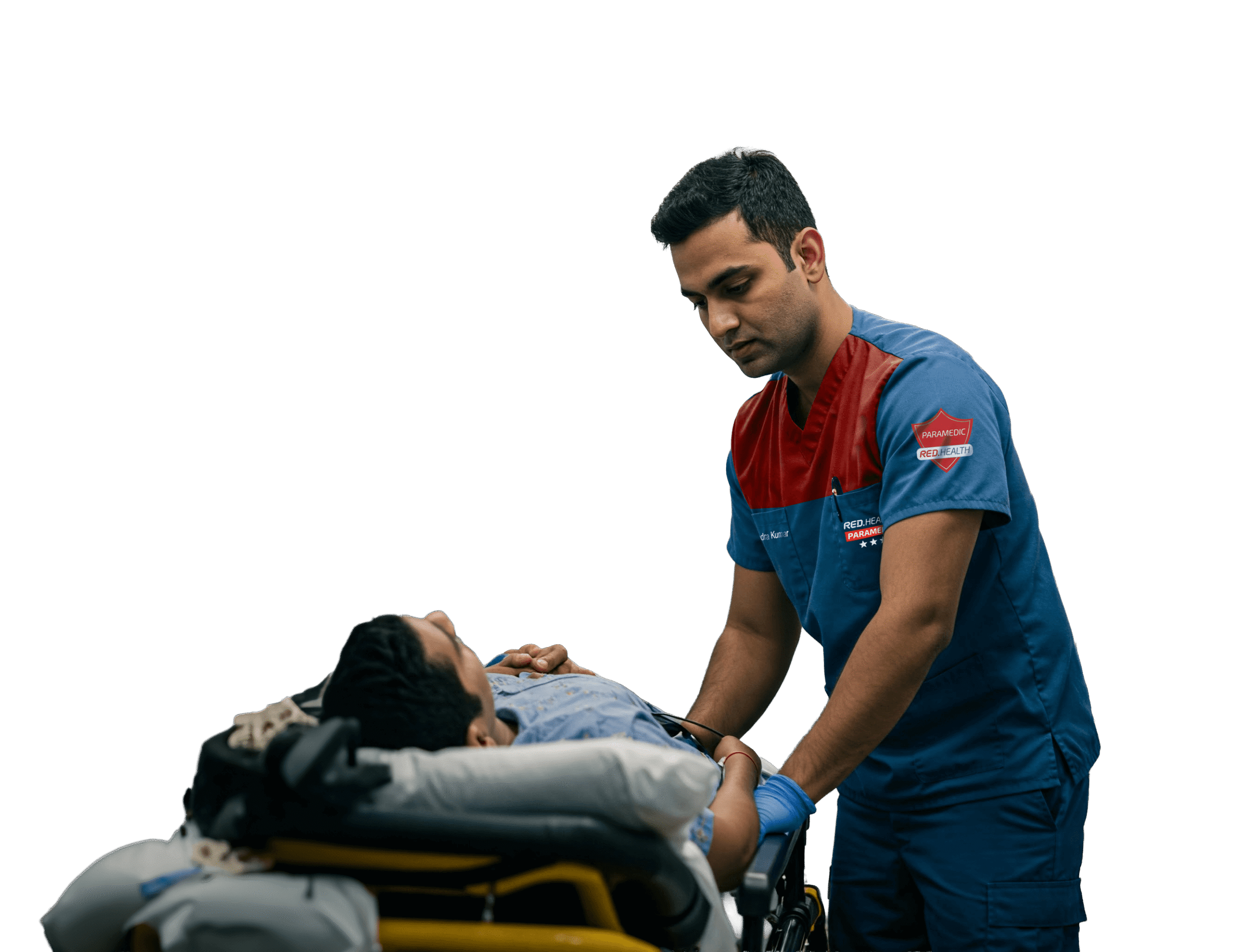
Learn from paramedics and healthcare professionals with years of on-field experience.

Course Highlights


  • Duration: 6 Months (Includes classroom learning and clinical internship).
  • Training Mode: Blended (Theory + Hands-on Practical Labs).
  • Locations: Chennai, Hyderabad, Bangalore, Gurgaon, Kolkata.
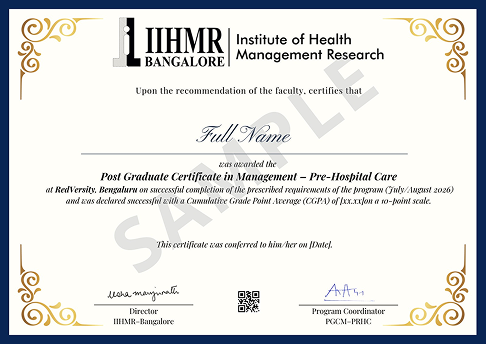
  • Certification: Industry-recognized certificate upon successful completion

Outcome &Career Growth

Upon completion, you won’t just have a certificate; you’ll have a career.

Immediate Roles

EMT, Ambulance Medic, Emergency Support Staff, Trauma Technician.

Work Environments

Private Hospitals, Government EMS, Corporate Occupational Health Centers, and International SOS services.

Growth Path

Start as an EMT-Basic $\rightarrow$ Progress to EMT-Advanced $\rightarrow$ Become a Paramedic or EMS Supervisor.

Detailed Program Modules

The RedVersity EMT-Basic curriculum is designed to move from foundational knowledge to high-pressure life-saving techniques.

Module 1: Foundations of Emergency Care
  • The EMS System: Understanding your role within the healthcare ecosystem and how to coordinate with hospitals.
  • Medical, Legal, and Ethical Issues: Learning about patient consent, “Duty to Act,” and maintaining patient confidentiality (HIPAA standards).
  • Safety & Wellness: Proper lifting and moving techniques to prevent provider injury and personal protection against infectious diseases.
Module 2: Anatomy, Physiology, and Medical Terminology
  • The Human Body: A deep dive into the skeletal, muscular, circulatory, and nervous systems to understand how injuries affect the body.
  • Vital Signs: Master the art of taking accurate blood pressure, pulse, and respiration rates under stress.
  • Medical Terminology: Learning the “language of medicine” to communicate effectively with doctors and nurses during patient handovers.
Module 3: Airway Management & Patient Assessment
  • Airway Pathophysiology: How to keep an airway open using OPA/NPA adjuncts and suctioning techniques.
  • Oxygen Therapy: Safe handling of oxygen cylinders and delivery via non-rebreather masks and nasal cannulas.
  • The Primary Survey: A systematic 60-second approach to identifying life-threatening conditions (ABC – Airway, Breathing, Circulation).
Module 4: Medical Emergencies & Pharmacology
  • Cardiovascular Care: Recognizing signs of a Heart Attack and performing high-quality CPR with AED (Automated External Defibrillator) usage.
  • Respiratory & Endocrine: Managing asthma attacks, allergic reactions (Anaphylaxis), and diabetic emergencies (Hypoglycemia).
  • General Pharmacology: Understanding the medications an EMT-B is authorized to administer or assist with.
Module 5: Trauma Management (The “Hands-On” Core)
  • Bleeding Control: Advanced use of tourniquets, pressure dressings, and managing internal bleeding/shock.
  • Soft Tissue & Burn Care: Treating lacerations, eviscerations, and calculating burn percentages.
  • Orthopedic Injuries: Splinting fractures and stabilizing dislocations to prevent further nerve damage.
  • Head and Spinal Injuries: Proper use of cervical collars and backboard immobilization.
Module 6: Special Populations & EMS Operations
  • Obstetrics & Pediatrics: Assisting in emergency childbirth and specialized care for infants and children.
  • Geriatric Care: Understanding the unique medical challenges and communication needs of elderly patients.
  • Ambulance Operations: Safe driving protocols, radio communication codes, and “Scene Size-up” at accident sites.
Module 7: Clinical Internship & Field Rotation
  • Hospital Rotation: Hands-on hours in a hospital Emergency Room (ER) observing patient triage.
  • Ambulance Ride-alongs: Real-world experience responding to 108/emergency calls under the supervision of a Senior Paramedic.